Silent Hill Townfall Soundtrack
Atmospheric audio design, CRTV signal mechanics, and the 1996 Scottish setting.
The SILENT HILL: Townfall soundtrack is composed by Pilotpriest, the Glasgow-based electronic musician and longtime collaborator of Screen Burn Interactive (formerly No Code). His previous work includes the score for Stories Untold, Observation, and the ambient textures that made No Code’s earlier titles feel like listening to a radio stuck between stations. Townfall is his most ambitious Silent Hill project: a 1996 Scottish island setting that requires analog dread made musical, not just atmospheric.
Pilotpriest’s Approach to Silent Hill
Pilotpriest does not write in the Akira Yamaoka tradition. Where Yamaoka’s Silent Hill scores blended grunge rock, ambient guitar, and jazz-hop melancholy, Pilotpriest’s Townfall work leans into the same frequencies as the CRTV itself: damaged analog transmission, shortwave radio drift, and the kind of bass that sits in your sternum rather than your ears. The goal is not a memorable melody. It is the feeling that St. Amelia is still broadcasting.
His approach for Townfall was documented in interviews as starting with the physical location. Screen Burn photographed St. Monans in Fife — the real harbour town that became fictional St. Amelia — and Pilotpriest listened to the ambient sound of that coastline: fog horns, distant ship engines, small-town radio static. What he built is not a soundtrack that illustrates the island. It is a transmission from it.
CRTV Static as Score
The CRTV is not just a gameplay device; it is an instrument. When Simon tunes the pocket television, the static patterns and signal fragments are scored. Different frequencies produce different tonal qualities — some unsettling, some almost beautiful in the way a detuned radio station can be. The team ran real CRTs through damaged cables and magnets to capture authentic screen-burn audio, then used that material as the foundation for the CRTV sequences.
This means the soundtrack and the gameplay are the same object. When you raise the CRTV to scan for threats, you are also hearing what Pilotpriest mixed into those frequencies. The hiss becomes a string section. The white noise becomes percussion. The world and the score share a channel.
The 1996 Scottish Setting
Townfall’s 1996 setting is not just aesthetic. Pilotpriest has spoken about the specific audio challenges of scoring a pre-mobile-phone world: no notification sounds, no app alerts, no digital compression artifacts. The island’s soundscape is analog all the way down. Distant landlines ring. Pay phones save. The CRTV picks up frequencies that should not exist.
This historical grounding creates sonic opportunities. Pilotpriest’s score for Townfall uses the texture of analog broadcast — the way a signal bounces off water, the interference patterns of coastal weather — as compositional material. The fog is not just visual. It has a sound.
Key Track Themes
Based on pre-release coverage, several musical themes emerge:
Shorefront Theme — The harbour area where Simon wakes has a score built around low tide frequencies and distant mechanical hum. The sense is desolation, not danger. The music does not tell you to be afraid; it tells you something is missing.
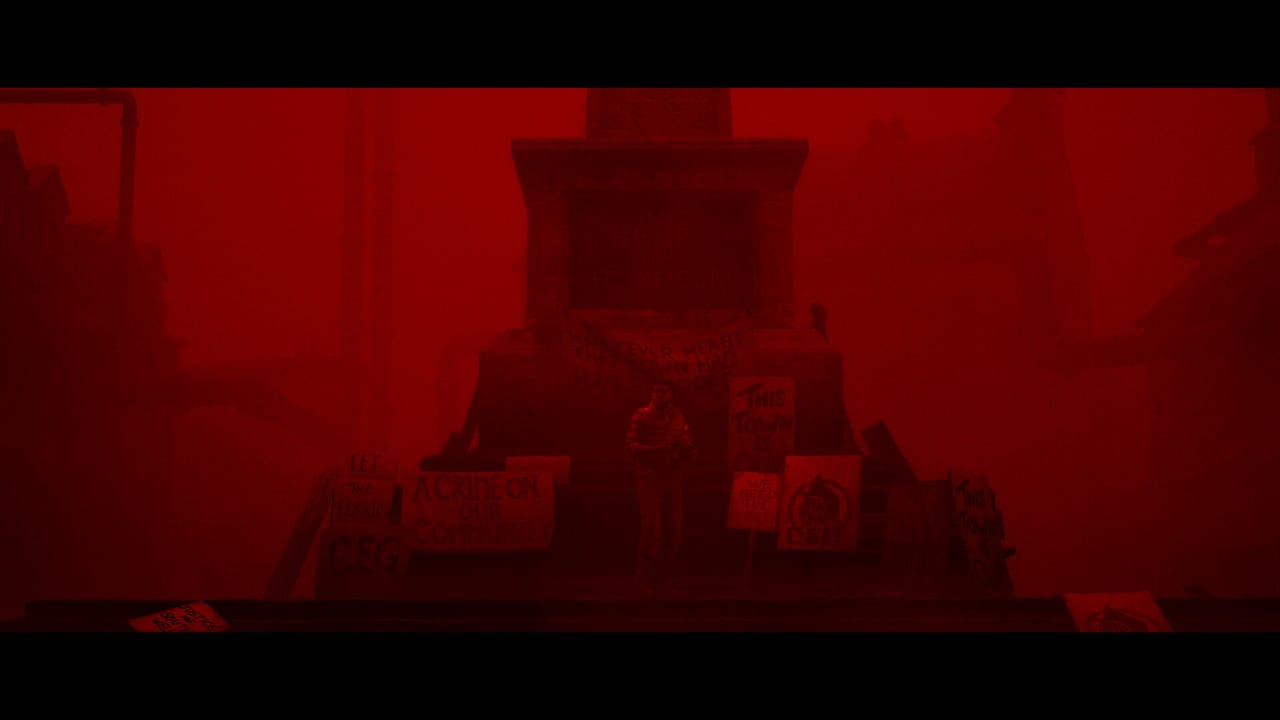
Otherworld Red — When St. Amelia enters the Otherworld state, the score shifts to deeper bass frequencies and aggressive static. The analog warmth of the harbour theme is corrupted, stretched, and made hostile. This is where Pilotpriest’s electronic background is most visible — the music becomes a signal being torn apart.
Zoe’s Transmission — Zoe Ellis speaks through the CRTV, and Pilotpriest scores those moments with filtered vocals and delayed echoes. She is a voice in the static, not a character with a theme song. The effect is more unsettling than any melody.
Audio Design Beyond Music
Townfall’s sound design extends beyond the score. Screen Burn’s games have always treated audio as gameplay information: footsteps in Observation, radio chatter in Stories Untold. Townfall continues this with the CRTV as the player’s primary audio interface — not just for story, but for threat detection.
DualSense haptics carry information too. The controller trembles when something walks near. The adaptive triggers resist when you try to force a blocked door. This tactile feedback is part of the soundscape: your hands hear what your ears might miss while staring at the CRTV glass.
Where to Listen
The full soundtrack will be available on streaming platforms at launch. Konami has not confirmed a physical release. Until then, the YouTube embed on this page features analysis and gameplay audio that demonstrates Pilotpriest’s approach to the CRTV-as-instrument concept.
For how the CRTV sounds in actual gameplay, see the CRTV guide. For how audio informs survival, see how to survive.
Frequently Asked Questions
Quick answers for launch week and first-person survival.
Who composed the Silent Hill Townfall soundtrack?
Pilotpriest, a Glasgow-based electronic musician who has scored Screen Burn's previous titles including Stories Untold and Observation.
Is the Townfall soundtrack available now?
Not yet. It will release on streaming platforms on or near the September 24, 2026 launch date. Physical release has not been confirmed.
How is the CRTV used in the soundtrack?
CRTV static patterns and signal fragments are scored as part of the music. The device is both gameplay tool and musical instrument — different frequencies produce different tonal qualities.
Does Townfall have vocal songs?
Not in the traditional Silent Hill sense. Zoe's voice appears filtered through the CRTV, but there are no J-pop vocals or rock tracks as in previous entries. The score is primarily electronic and ambient.
Will there be a Collector Edition soundtrack?
Not confirmed by Konami. Check the editions page for physical bonus details closer to launch, and the updates hub for any soundtrack announcements.